Shopping Cart
There are no more items in your cart
Rieju MR 300i 2027: Racing, Pro and Hard Enduro
Rieju MR 300i 2027: compare the Racing, Pro and Hard Enduro versions, their equipment, the TFI engine and the setup dedicated to overcoming obstacles.
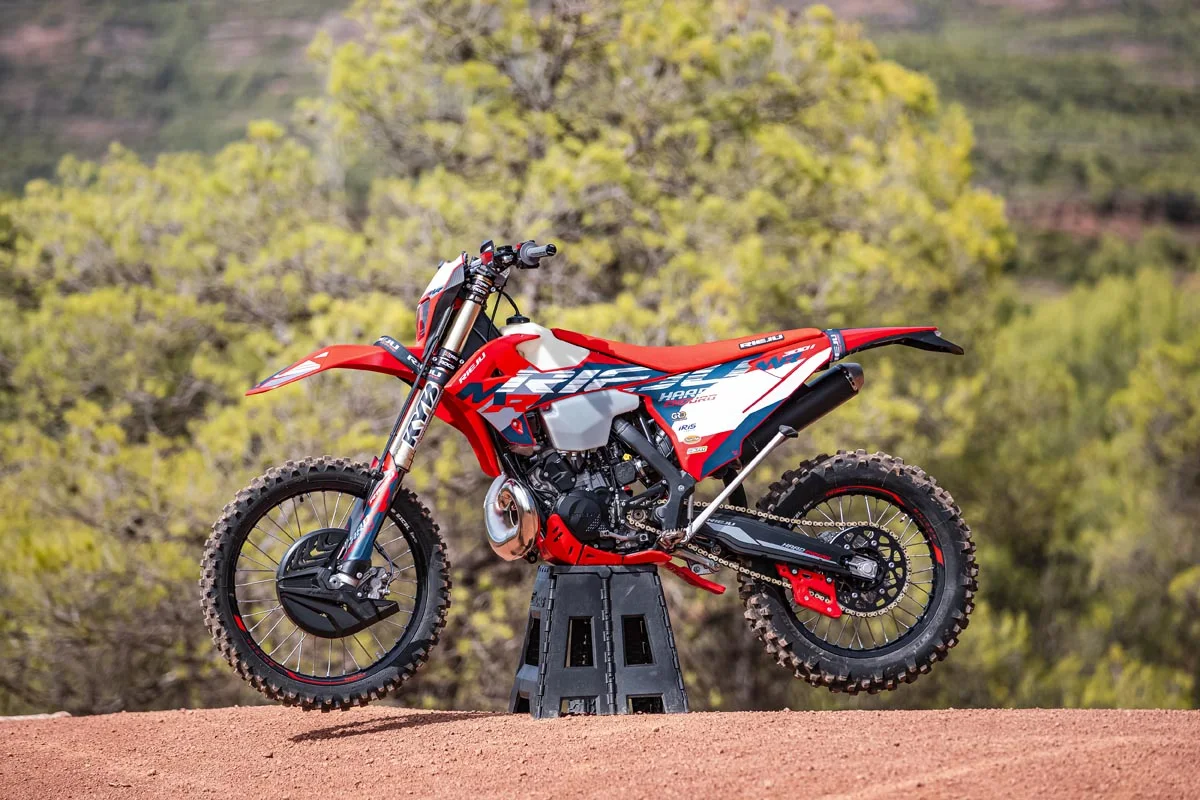
Rieju MR 300i 2027: compare the Racing, Pro and Hard Enduro versions, their equipment, the TFI engine and the setup dedicated to overcoming obstacles.
Rieju MR 300i Hard Enduro 2027 on its stand. Credit / source: Rieju — Enduro21.
Racing, Pro and Hard Enduro: a common base
Rieju structures its MR 300i 2027 range around three versions. Its September release confirms a common base: a 300 cc two-stroke engine with TFI injection, three Race, Forest and Wet maps, an electronic exhaust valve and a diaphragm clutch. The LED headlight, front mask and graphics evolve on the model year.
The comparison therefore mainly comes down to the level of preparation. This is not about choosing between three displacements or three engine architectures: the equipment differences answer track and riding priorities.
MR 300i Racing: the entry level in the range
The Racing notably keeps KYB suspension, EXCEL wheels with cast hubs, Mitas Terra Force tyres and Nissin braking paired with Galfer discs, according to Rieju's presentation.
When assessing an entry-level version, counting accessories is not enough. It is more useful to list the items genuinely needed for your riding and those that come down to personal preference. A very specific setup does not have the same value on varied trails as it does in repeated technical sections.
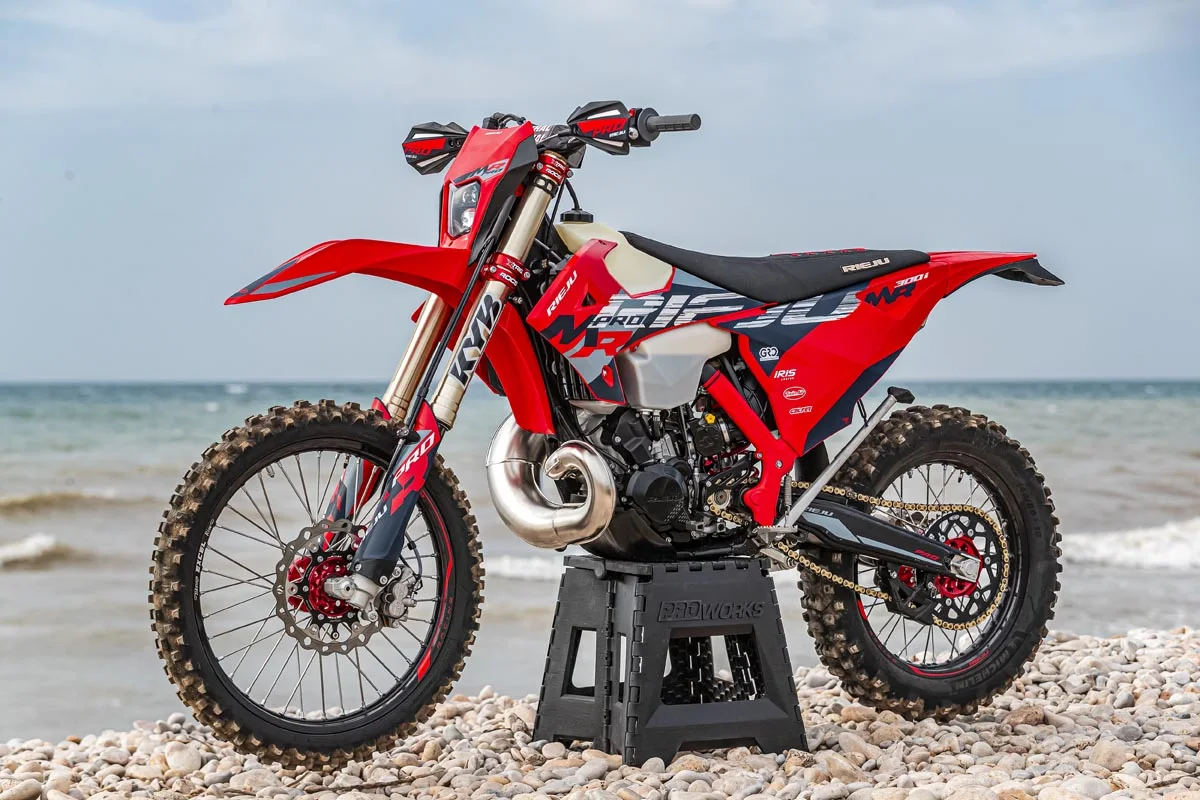 Rieju MR 300i 2027 shown in profile on a gravel surface. Credit / source: Rieju.
MR 300i Pro: a more elaborate specification
The Pro stands out, among other things, for the DLC treatment of its KYB fork, the red XTRIG triple clamps, the Renthal Fatbar handlebar and the machined hubs. Rieju also announces Michelin Enduro tyres and a Galfer floating front disc.
These components sit within a logic of more advanced finishing and preparation. They do not replace the match between the bike and its rider: settings, ergonomics and terrain type remain essential. The right comparison is to examine what actually changes on the bike, rather than looking only at the version name.
Hard Enduro: cooling and low-speed operation
The official spec sheet for the Hard Enduro describes a specific setup: adapted engine inertia, a higher-flow water pump, expansion tank and twin fans. A shorter final drive ratio and a dedicated exhaust complete this orientation towards slow sections.
At low speed, air passes through the radiators less quickly while the engine can remain heavily loaded. That is what makes cooling particularly important in obstacle crossings. Working on inertia and gearing, in turn, aims to make the response more usable in these situations. These are design objectives, not a test result measured by RAW.
Protection is part of the preparation
Rieju equips this version with protection, including an AXP bash plate, disc and swingarm guards, as well as recovery straps. The approach therefore goes beyond decoration: several items usually added for demanding use are here part of the announced specification.
To separate Racing, Pro and Hard Enduro, the most useful question remains the main type of use. How often you tackle slow sections, the need for protection and the equipment you already own make it possible to compare the setups on a concrete basis. Prices and availability in France are still to be confirmed for each version.
Article published on 16 September 2026 and updated on 17 September 2026.